INNOVATION
Brine Lithium Moves From Theory to Test Case
Early success in Alberta suggests brine-based lithium could help ease battery supply strains, though commercial scale remains an open question
6 Feb 2026
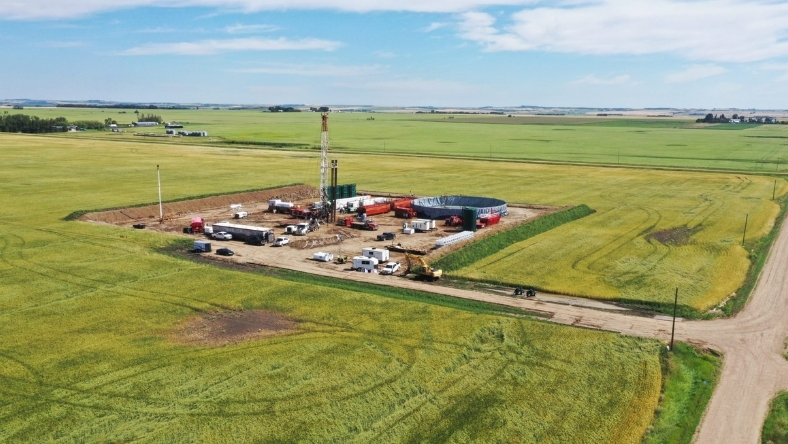
Lithium extraction from oilfield brine, long viewed as an experimental idea, is beginning to show signs of commercial promise, with potential implications for North America’s battery supply.
As demand for electric vehicles accelerates, manufacturers are under pressure to secure lithium supplies that can be developed more quickly and with fewer environmental costs. Conventional hard rock mines often take a decade or more to permit and build, while evaporation ponds used in South America require large areas of land and long processing times. These constraints have drawn attention to alternative sources.
In Canada, E3 Lithium has reached a milestone that industry observers have been watching closely. The Alberta-based company recently produced battery-grade lithium carbonate at demonstration scale from oilfield brine, a by-product of oil and gas production. While the result does not confirm commercial viability, it shows that lithium extracted from brine can meet the purity standards required by battery manufacturers.
The development has broader significance. Brine-based lithium extraction offers a different production model that relies on existing wells and infrastructure rather than new mines. Water used in the process can be reinjected underground, potentially reducing surface disruption and easing permitting. Supporters argue this could shorten development timelines and lower environmental impact, factors that appeal to carmakers, battery producers and investors seeking diversified supply chains.
E3’s project is part of a wider effort across North America to test so-called direct lithium extraction technologies. Several companies and research groups are running pilot plants or laboratory trials. Most remain at an early stage, and none has yet demonstrated sustained commercial-scale production. Still, the growing number of projects suggests a shift in industry thinking about how lithium might be sourced.
Timing remains critical. Battery demand continues to exceed earlier forecasts, and concerns about supply shortages persist. While brine-based production is expected to grow, uncertainties remain over costs, scalability and long-term performance.
For now, lithium from oilfield brine occupies a space between promise and proof. Whether demonstration projects can be converted into reliable, large-scale supply will help determine its role in the future battery economy.
Latest News
18 Mar 2026
Mining Waste Yields Lithium With a Breath of Air13 Mar 2026
The Material That Might Fix Direct Lithium Extraction9 Mar 2026
Canada’s Lithium Gamble Just Got C$36.5M Bigger4 Mar 2026
Can Digital Twins Help Crack the Lithium Bottleneck?
Related News
TECHNOLOGY
18 Mar 2026
Mining Waste Yields Lithium With a Breath of Air

RESEARCH
13 Mar 2026
The Material That Might Fix Direct Lithium Extraction
INVESTMENT
9 Mar 2026
Canada’s Lithium Gamble Just Got C$36.5M Bigger
SUBSCRIBE FOR UPDATES
By submitting, you agree to receive email communications from the event organizers, including upcoming promotions and discounted tickets, news, and access to related events.